

Table of Contents
- What Makes an Online Store Trustworthy for Physio-Recommended Braces
- TGA Approved Medical Braces: What the Registration Actually Means
- How to Measure for a Knee Brace (and Why It Decides Everything)
- Private Health Insurance Rebate for Braces: What You Can Claim
- Medical-Grade vs Retail Braces: What Changes at the Clinical Level
- Post-Operative vs Preventative Braces: Two Different Jobs
- Frequently Asked Questions
Last Updated: September 18, 2026
What Makes an Online Store Trustworthy for Physio-Recommended Braces
Searching for physio-recommended braces online means sorting genuine clinical suppliers from stores that use medical language in their marketing. This guide from REHABESHOP covers how to tell them apart, what registration proves, and how to measure yourself so the brace you order is the brace you need.
Trustworthy stores list the manufacturer and model, not just "knee support." They publish sizing based on real measurements rather than S/M/L guesswork, carry established orthopaedic brands, and can tell you what a brace is for and what it is not for. A store that cannot answer those questions is selling a product, not a treatment.
At REHABESHOP, every product page carries the manufacturer's own sizing guide and a clear statement of who a brace suits and who it does not, the baseline you should expect from any supplier.
TGA Approved Medical Braces: What the Registration Actually Means
TGA approved medical braces are entered on the Australian Register of Therapeutic Goods (ARTG), meaning the sponsor has demonstrated the device meets the applicable essential principles for safety and performance. It is a regulatory benchmark, not a clinical endorsement of one brand over another.
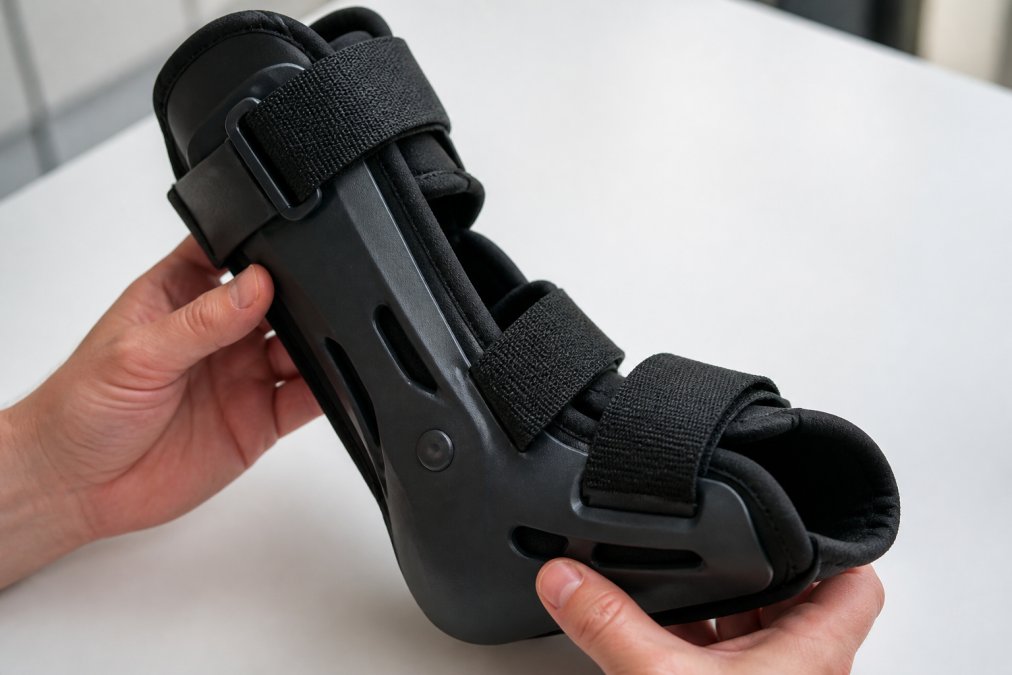
What Registration Actually Covers
An ARTG entry means the sponsor has lodged evidence that the device is safe for its intended purpose, its labelling is accurate, and manufacturing meets the relevant conformity assessment procedures. Most off-the-shelf orthopaedic braces sit in lower-risk device classes, so assessment is proportionate to the risk rather than exhaustive clinical testing of every unit.
What registration does not cover matters equally. It does not certify that the brace suits your specific injury, outperforms a competitor's device, or would be recommended by a physiotherapist for your stage of recovery. A registered brace fitted to the wrong joint or worn at the wrong point in rehabilitation is still the wrong brace.
How to Verify a Brace Is Actually Registered
Any store can print "TGA approved" on a product page. Verification takes about a minute and is worth doing before you buy a clinical-grade device.
- Ask the store for the ARTG number, or check the product page for it. It is a numeric identifier, not a marketing phrase.
- Search that number on the TGA's public ARTG search. The entry should name the sponsor, the device name and the intended purpose.
- Check that the device name on the ARTG entry matches the product you are buying. A registered knee brace does not cover a differently named ankle support from the same brand.
- If the store cannot supply an ARTG number, treat "TGA approved" as unverified marketing language.
The Therapeutic Goods Administration guidance on medical devices sets out what registration covers and what it does not, including how to search the register.

Why This Distinction Matters at the Point of Purchase
Online retail often blurs three separate claims: that a device is registered, that it is clinically effective, and that it is physiotherapist-recommended. Only the first is a regulatory fact you can check. The second depends on the manufacturer's evidence and the condition treated. The third is a clinical judgement about your individual presentation.
When comparing two registered braces, the tie-breakers are what registration cannot answer: does the manufacturer publish circumference-based sizing, does the store name the model and intended use, and can the supplier tell you who the brace is not suitable for. Those questions separate a clinical supplier from a store that has learned the vocabulary.
How to Measure for a Knee Brace (and Why It Decides Everything)
Measuring for a knee brace requires two circumference readings on the affected leg: one around the centre of the kneecap with the leg straight, and one around the thigh roughly 15 centimetres above it. Match both to the manufacturer's chart, not your clothing size.
A brace one size out will slide down during walking or restrict circulation at the edges.
- Measure in the morning if swelling fluctuates through the day
- Keep the tape firm but not tight, level around the limb
- Measure the affected leg, not the healthy one
- If you sit between two sizes, or have marked swelling, ask your physiotherapist to confirm
Measuring for Ankle and Achilles Supports
Ankle and Achilles supports are sized on ankle circumference and, for taller designs, calf circumference. The Medi Achimed Achilles Tendon Support is available in six sizes and includes removable heel wedges for use when professionally recommended. The Bauerfeind MalleoTrain Ankle Support uses a compressive knit with graduated edge compression, so fit tolerance is narrower than a strapped shell.


| Support type | What to measure | Common fitting error |
|---|---|---|
| Hinged knee brace | Knee centre + thigh circumference | Bars sitting off the joint line |
| Compression knee sleeve | Knee centre circumference | Sizing on the swollen leg only |
| Achilles support | Ankle + calf circumference | Sleeve rolling at the upper edge |
| Lateral ankle shell | Ankle circumference | Shell not sitting over the outer malleolus |
Private Health Insurance Rebate for Braces: What You Can Claim
A private health insurance rebate for braces depends on your fund, your level of cover and whether the item is listed as a therapeutic appliance under your policy. No single national rebate applies to every brace.
Medical-Grade vs Retail Braces: What Changes at the Clinical Level
Medical-grade braces differ from retail supports in three ways: materials, anatomical design, and control over joint movement. A retail sleeve provides warmth and light compression; a clinical brace is built to limit or guide a specific motion.
| Feature | Retail support | Medical-grade brace |
|---|---|---|
| Primary function | Warmth, light compression | Joint stability, motion control |
| Frame | None or soft | Rigid shell or hinged bars |
| Sizing | Garment sizes | Measured circumference charts |
| Typical lifespan | Short, with heavy use | Longer under daily wear |
Breathability: The Spec That Decides Whether You Actually Wear It
Breathability is the most under-discussed specification in brace buying, and it often determines whether a patient completes a rehabilitation protocol. A brace that traps heat and moisture becomes uncomfortable within an hour and gets removed. Wear time drives results, so a brace you take off after 40 minutes is clinically useless however well it stabilises the joint.
Durability: What Breaks First and Why It Matters
Durability in a medical-grade brace is not about surviving a single season. It is about holding mechanical properties, compression, hinge resistance, strap tension, across hundreds of wear cycles and repeated washing. When they degrade, the brace stops doing its prescribed job even though it still looks intact.
What This Means for Your Purchase Decision
If you are choosing between a cheaper retail support and a clinical-grade brace for a condition you will manage for weeks or months, the cost difference is usually recovered in wear time and replacement frequency. A retail sleeve that loses compression after a few weeks and is replaced twice is rarely cheaper than a medical-grade brace that holds its properties for a full rehabilitation cycle.
Post-Operative vs Preventative Braces: Two Different Jobs
Post-operative and preventative braces are not interchangeable. A post-operative brace protects a repair or surgical site during a defined healing window, often with range-of-motion limits built in. A preventative brace supports an unstable or at-risk joint during sport and daily activity.
Frequently Asked Questions
How do I know if a medical brace is medical-grade?
Medical-grade braces are typically registered with the TGA and carry a certified compression rating, such as 20-30 mmHg. They are made from clinical materials and designed for specific therapeutic purposes. Look for products with clear sizing guides, manufacturer details, and evidence of clinical use. If a product makes vague claims without TGA registration or specific compression data, treat it with caution and ask your physiotherapist before buying.
Can I claim medical-grade braces on private health insurance in Australia?
Many private health funds offer rebates for physio-recommended braces when prescribed by an allied health professional. Coverage depends on your fund, your level of cover, and whether the brace is listed as a therapeutic aid. Check with your insurer before purchasing and ask your physiotherapist for a written recommendation. Keep your receipt and any supporting documentation, as some funds require a provider number or specific item codes for the rebate.
How do I ensure I am buying the correct size for a medical brace?
Measure the relevant limb circumference using a soft tape measure, following the manufacturer's sizing guide exactly. For a knee brace, measure around the centre of the kneecap and mid-thigh. If you are between sizes or have significant swelling, ask your physiotherapist which fit is appropriate. A brace that is too loose will not provide joint stability, while one that is too tight can restrict circulation and cause numbness or skin irritation.
Are online medical brace stores regulated by the TGA?
The TGA regulates therapeutic goods, including medical braces, that are supplied in Australia. Not all braces require TGA registration, but those making specific therapeutic claims must comply with TGA requirements. When buying online, check that the store is Australian-owned and operated, lists product details clearly, and offers a returns policy. A reputable store will provide sizing guides and manufacturer information for every brace.
0 comments